


First salary guide for freshers ,That first salary credit SMS hits differently. After years of asking parents for money, suddenly it’s yours. And within a few months, many freshers look at their bank balance and wonder where it all went. A few simple habits in your first year can save you years of catching up. Here’s a no-jargon plan.
1: Understand your payslip
Your payslip shows earnings (basic, HRA, special allowance) and deductions (your PF contribution, professional tax, income tax/TDS). Your in-hand amount is earnings minus deductions. If you’re unsure why in-hand is lower than you expected, our fresher salary guide explains CTC vs take-home.
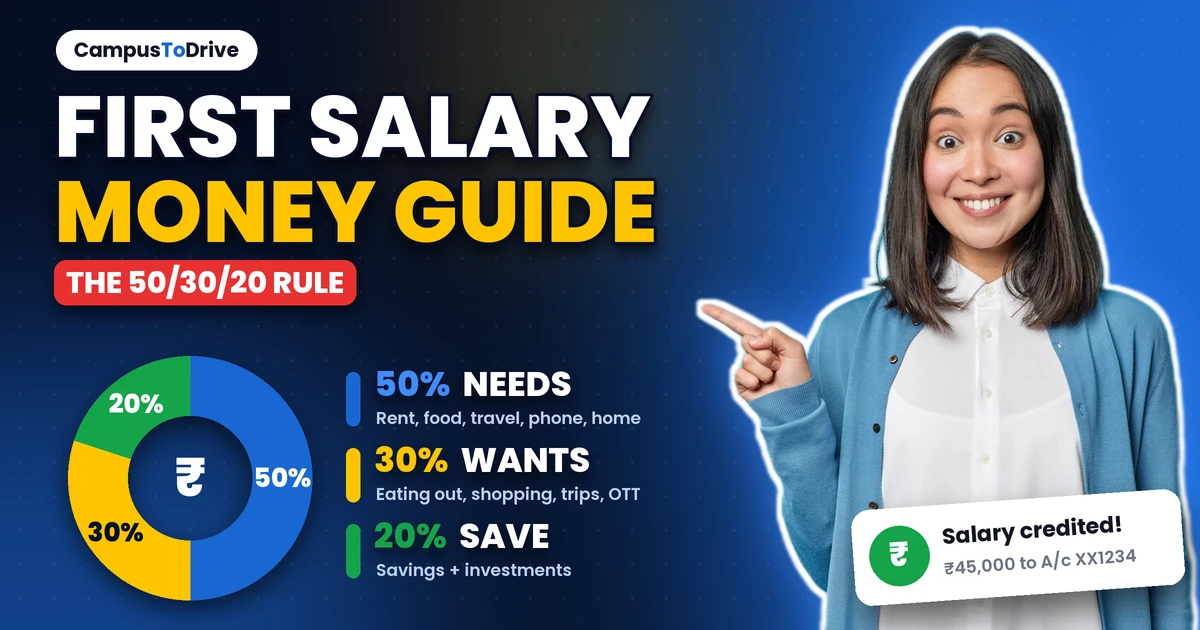
2: Use a simple budget – the 50/30/20 idea
- 50% needs: rent, food, travel, phone, any money you send home
- 30% wants: eating out, shopping, trips, subscriptions
- 20% savings and investments
Living in an expensive city on a ₹25,000 in-hand salary? The split might be 65/20/15 at first, and that’s fine. The point is that savings happen first, on salary day, not with whatever’s left at month end.
3: Build an emergency fund
Before investing anywhere, save 3–6 months of basic expenses in a savings account or a sweep-in FD. Job changes, layoffs, medical bills and a phone that suddenly dies all happen. This fund keeps you away from credit card debt when they do.
4: Know what PF is doing for you
Usually 12% of your basic pay goes to your EPF account, and your employer adds a matching contribution (part of it goes to pension). It’s long-term, low-risk savings. Activate your UAN, link your Aadhaar and bank account, and don’t withdraw PF every time you switch jobs. Transfer it instead.
5: Income tax basics
- Most freshers now use the new tax regime, which has lower rates but fewer deductions. Under the changes announced in Budget 2025, salaried individuals with taxable income up to around ₹12 lakh (plus the standard deduction) generally pay no income tax because of the rebate. Always check the current year’s rules.
- Your employer deducts TDS monthly if needed and gives you Form 16 after the financial year.
- File your income tax return (ITR) every year, even if your tax is zero. It builds a record that helps with loans and visas later.
6: Get insured (cheaply, while young)
- Health insurance: your company policy is great, but it ends when you leave. A small personal policy is worth considering.
- Term life insurance: only needed if someone depends on your income, like parents or a spouse. It’s very cheap when you’re young.
- Avoid mixing insurance and investment in your first year unless you fully understand the product.
7: Start investing – small and boring is good
Once your emergency fund is in place, a monthly SIP (Systematic Investment Plan) in a diversified mutual fund is a common starting point for long-term goals. Even ₹1,000–₹2,000 a month, started at 22, can grow meaningfully over time through compounding. Read our guide on mutual funds in India to understand the options, and don’t put money into anything you can’t explain to a friend.
Money traps freshers fall into
- Buying the latest phone on EMI in month one
- Paying only the minimum due on a credit card. The interest is brutal.
- “Guaranteed return” crypto, trading or betting apps recommended on Instagram
- Lending money you can’t afford to lose
- Instant loan apps with hidden charges
Frequently asked questions
How much should a fresher save from salary?
Start with whatever you can do consistently. Even 10–15% is a good beginning. Aim to reach about 20% as your salary grows.
Should a fresher get a credit card?
A basic card can help build your credit score, but only if you pay the full amount on time, every month.
Related reads
Check your rights as a new employee and browse the latest jobs if you’re still looking for that first salary.
Financial disclaimer: This article is general information for education only and isn’t financial, tax or investment advice. CampusToDrive is not a SEBI-registered investment adviser. Tax rules change each year, and mutual fund investments are subject to market risks. Consult a qualified adviser before making financial decisions.




[…] our first salary money guide, prepare with the HR interview questions, and find verified openings on our jobs […]