
You’ve got the offer. Congratulations! Now, before you hit “Accept” in excitement, spend 20 minutes actually reading it. Many problems freshers face later – surprise bond amounts, unpaid notice periods, delayed joining – were sitting right there in the offer letter all along.
Offer letter vs appointment letter
An offer letter is the company’s proposal: role, salary, joining date, conditions. An appointment letter (or employment contract) usually comes when you join and contains the detailed terms. Read both. If something in the appointment letter differs from what you were promised, ask before you sign.
What to check in your offer letter
- Designation and role: is it what you interviewed for?
- CTC breakup: fixed pay vs variable pay vs one-time bonuses
- Joining date and location: and whether either can change
- Probation period: often 3–6 months, sometimes with a shorter notice period
- Notice period: commonly 30–90 days after confirmation
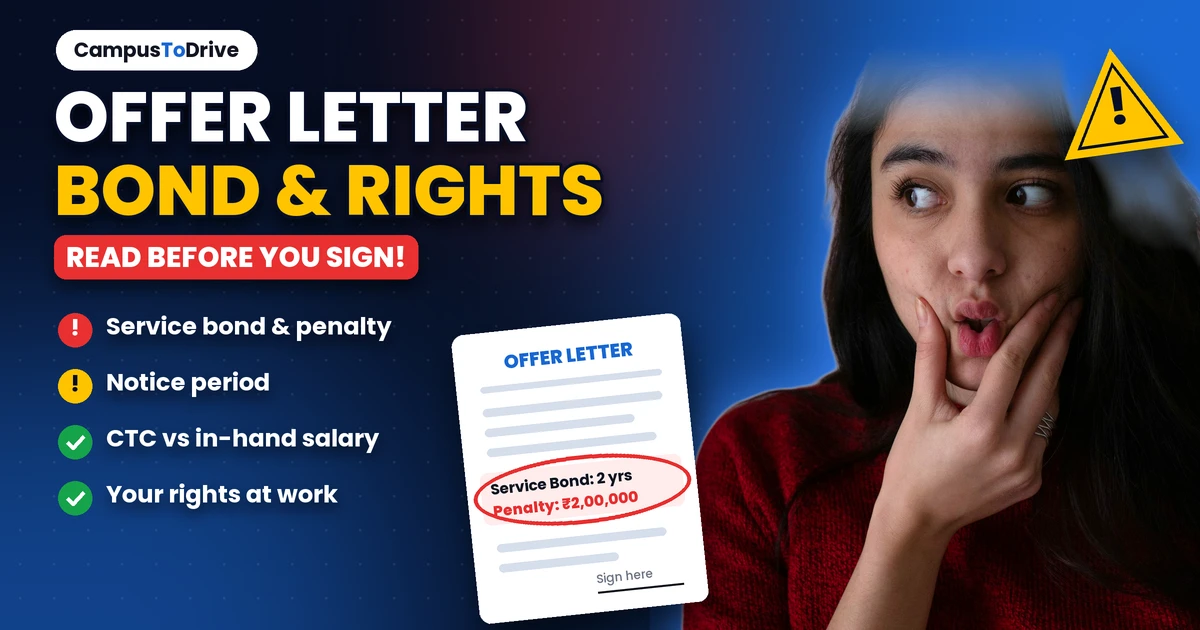
- Service agreement or bond: duration, amount and when it applies
- Background verification: what documents they’ll check
- Offer validity: the date by which you must accept
Service bonds – what you should know
Some companies ask freshers to sign a service agreement, for example to stay 1–2 years or pay a fixed amount if you leave early. They usually justify it as the cost of training.
- Get the exact amount, duration and conditions in writing before joining.
- In India, courts have generally looked at whether the amount is reasonable and linked to a genuine loss, such as actual training costs. The enforceability of each bond depends on its terms and facts.
- Be cautious if a company asks you to submit original educational certificates as security. Ask whether copies or verification are enough, and get a written acknowledgement for anything you hand over.
Basic workplace rights every fresher should know
- Payslips and timely salary: you should receive salary on time with a payslip showing the breakup.
- Provident Fund: eligible employees should see PF deductions credited to their EPF account. Check it on the EPFO portal using your UAN.
- Form 16: if tax was deducted, your employer issues it after the financial year.
- Leave: your leave policy (earned, sick, casual) should be documented.
- Safe workplace: under the POSH Act, 2013, organisations with 10 or more employees must have an Internal Committee to handle sexual harassment complaints.
- Relieving and experience letters: when you leave after serving your notice, you can request these documents and your full and final settlement.
Red flags – walk away or ask questions
- Any “company” asking you to pay for training, a laptop, security deposit or registration before joining
- Offer letters from Gmail or Yahoo addresses, with no official domain
- No interview at all, but an “offer” anyway
- Pressure to accept within hours
- Salary or role that seems far too good for the requirements
Genuine employers like TCS, Infosys, Accenture or HSBC don’t charge candidates for jobs. If you’re unsure whether an offer is real, verify it on the company’s official careers site, or write to us at support@campustodrive.com.
Frequently asked questions
Can I negotiate my joining date?
Often yes, especially if you have exams or another genuine reason. Ask politely, by email, well before the date.
What happens if I don’t join after accepting an offer?
Inform the company professionally as early as possible. Some companies may block you from reapplying for a while. Check your offer terms for any specific conditions.
Is a verbal offer enough?
No. Always wait for a written offer from an official company email address before you resign or turn down other opportunities.
Related guides
Read our first salary money guide, prepare with the HR interview questions, and find verified openings on our jobs page.
Legal disclaimer: This article is general information and isn’t legal advice. Employment terms and their enforceability depend on your specific contract, state laws and facts. For a specific dispute, consult a qualified lawyer or your state labour department.